Energy Bars and Cycling: Boost Your Performance with a Proper Nutrition Plan
Whether you are a beginner or an experienced cyclist, cycling is a particularly demanding sport that requires a lot of energy during exercise. If you want to perform at your best, proper daily nutrition and snacks such as sports energy bars during competition are very important to provide the energy you need. When should you eat them? How to use them to get the most out of their benefits? Read below.
What are the special nutritional needs of athletes?
Cycling is a versatile sport that involves all the muscles of the body. Therefore, a lot of energy is consumed, especially if the load is long. As a result, it requires very high caloric requirements in order for the body to function at its best and perform at its best. Let’s take for example a 1.80 m tall man who weighs 75 kg and is 35 years old. If this person is sedentary, their daily caloric needs are approximately 2388 kcal (according to Black et al.’s metabolic formula). On the other hand, if this man rides a bike 3 hours a week, he needs 3161 kcal per day. Quite a difference between a sedentary person and an athletic person!
You burn calories quickly during exercise, so your body needs a constant supply of energy and macronutrients, whether they are carbohydrates, proteins or fats:
- Carbs are the main fuel to keep you going. In cycling competitions, they need to be a quick source of energy to maintain good endurance levels.
- Protein is crucial for muscle repair and recovery after exercise;
- Fats help maintain long-term energy levels and also provide ‘fuel’ during exercise after the first hour of continuous exercise.
Therefore, nutrition is essential if the bike ride lasts more than 1h 30min to supply the body with nutrients. As with food, it is important to maintain a good intake of water and electrolytes to avoid dehydration.
Energy bars: convenient nutrition for cyclists
What are the benefits of energy bars during a cycling race?
Energy bars can be helpful during cycling competitions:
- They provide carbohydrates as well as protein and fat to maintain energy levels and combat hunger;
- They promote the absorption of micronutrients (vitamins and minerals), making them an excellent addition to isotonic drinks;
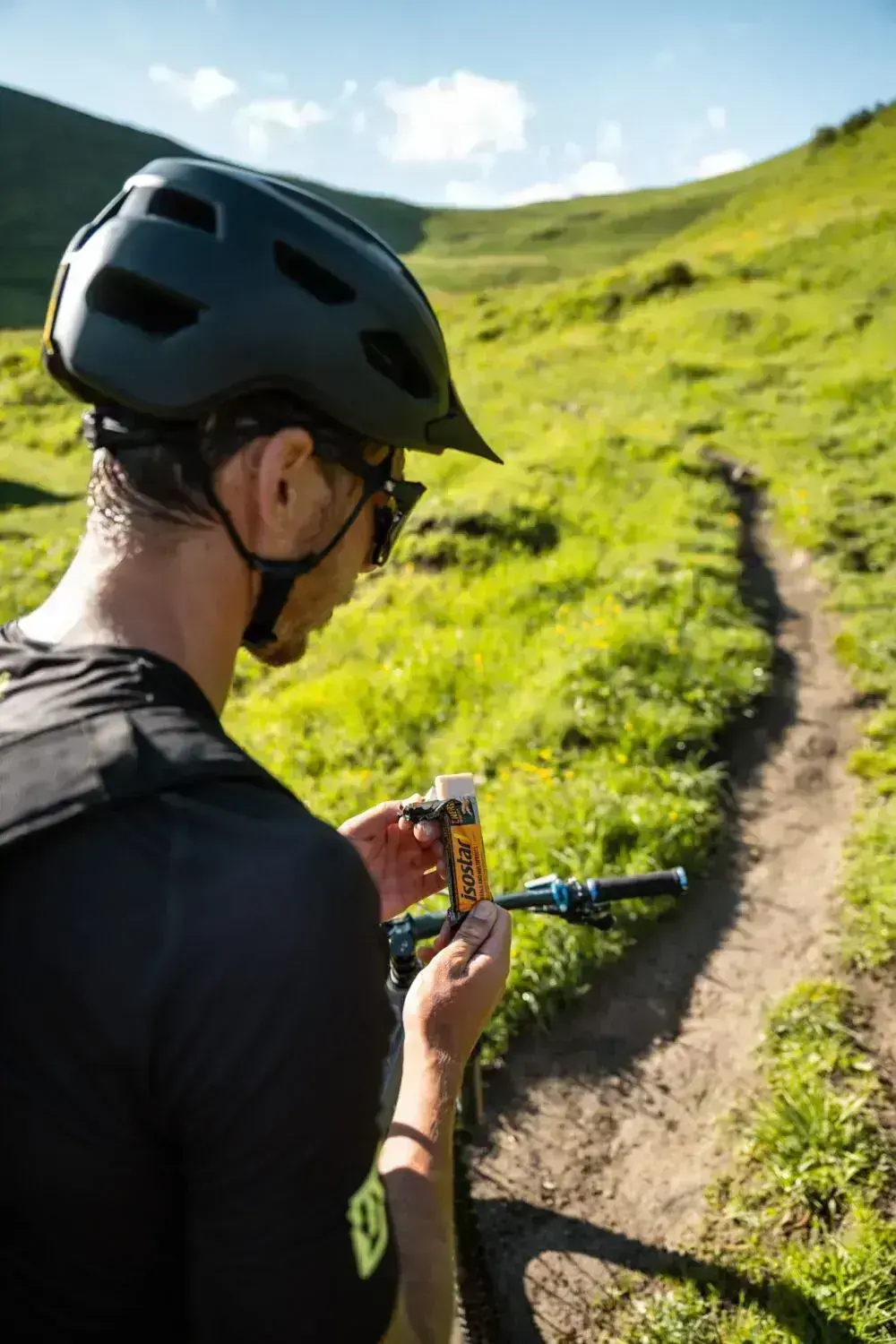
- They are practical to take with you: compact, easy to put in a bag or shirt pocket for longer trips;
- It is easy for them to control portions because all the nutritional information such as energy, carbohydrates, fat and protein is listed on the package;
- They allow you to diversify food sources and limit fatigue during long journeys.
How to choose the best energy bars?
There is a huge variety of energy bars on the market, varying in ingredients and quality.
To make the best choice, first look at the label. The list of ingredients and the composition of nutrients are the initial indicator of the quality of the product: the content of carbohydrates, fats and proteins must be sufficient to meet your individual needs, to provide energy quickly, and it must be adapted to your sporting activity. Ideally, a sports energy bar should contain up to 70% carbohydrates, about 10% fat and less than 10% protein.
In addition, it is also possible to take micronutrients, for example:
- B group vitamins – necessary for energy metabolism;
- A, E and C vitamins – have antioxidant properties;
- Vitamin D – is essential for immunity, calcium absorption and bone health.
Choose the flavor and texture that you like! It should have a soft texture to make it easier to eat on the go
If possible, choose a trusted brand with a long history of sports nutrition. You will be able to find many reviews about the product to get an idea of its quality and popularity.
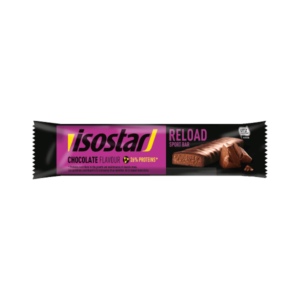
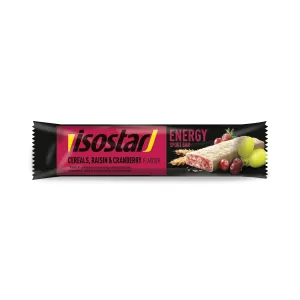
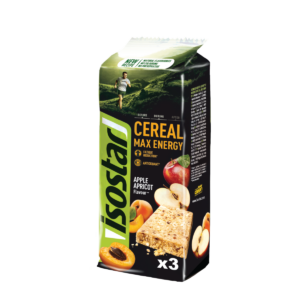
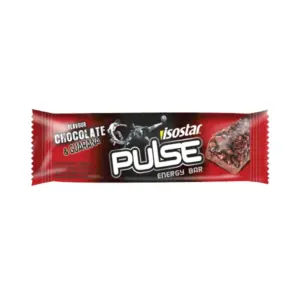
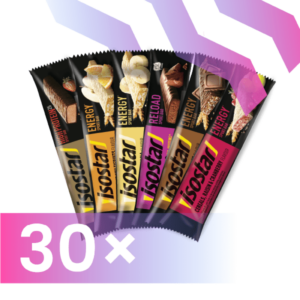
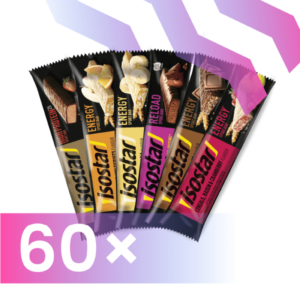
We offer bars of the reliable ISOSTAR brand, which will help you absorb energy, as well as vitamins and minerals, without overloading the body. Choose one of the popular Energy series bars available in 5 flavors, Cereal Max bars for long loads or Pulse series bars with guarana.
Once you have purchased energy bars, test them during training and before any major journey to make sure they are suitable in terms of taste, texture, effectiveness and digestive tolerance.
How to include energy bars in your diet plan?
How we incorporate energy bars into our diet plan is important. The amount of bars to be consumed depends on various factors, such as duration of exercise, personal tolerance, weight and intensity of rides. In general, we recommend that you aim to eat one to two energy bars per hour of intense exercise.
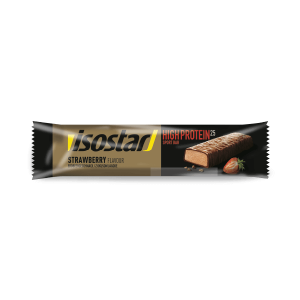
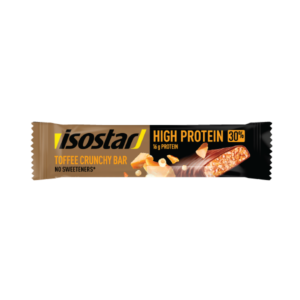
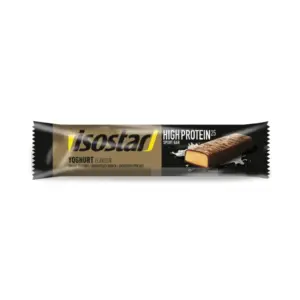
Depending on your nutritional needs, you probably won’t eat the same bars. During exercise, prefer carbohydrate-rich bars to quickly replenish energy reserves and delay fatigue. To help your muscles recover after a workout, it’s best to opt for a protein bar. Choose one of the Isostar protein series bars!
When it comes to when to eat a bar, you need to think strategically. The bar should be eaten at important times when you are likely to spend a lot of energy: before difficult climbs, during planned breaks or as soon as you feel tired.
And don’t forget hydration! Drink plenty of water or isotonic drinks to stay well hydrated and make the bars easier to digest and absorb.
Energy bars for better cycling performance
Energy bars are a cyclist’s ally during a race. With long-term exertion, energy tends to decrease, and the reserves can run out quickly – you have to “fill up”!. Thanks to the carbohydrate, fat and protein content, the bars are a good solution for overcoming fatigue.
But, of course, nutrition cannot consist only of energy bars. Daily nutrition should be varied and balanced if you want to stay healthy, ensure good cycling figures and performance throughout the year and limit injuries.
ISOSTAR ENERGY BARS
-
-
Outlet, Kits, Buy in bulk, Bars
Original price was: €48.00.€33.59Current price is: €33.59. Select options -
-
Outlet, Kits, Buy in bulk, Bars
Original price was: €96.00.€62.40Current price is: €62.40. Select options
ISOSTAR PROTEIN BARS
-
-
Outlet, Kits, Buy in bulk, Bars
Original price was: €39.20.€27.45Current price is: €27.45. Select options -
-
-